

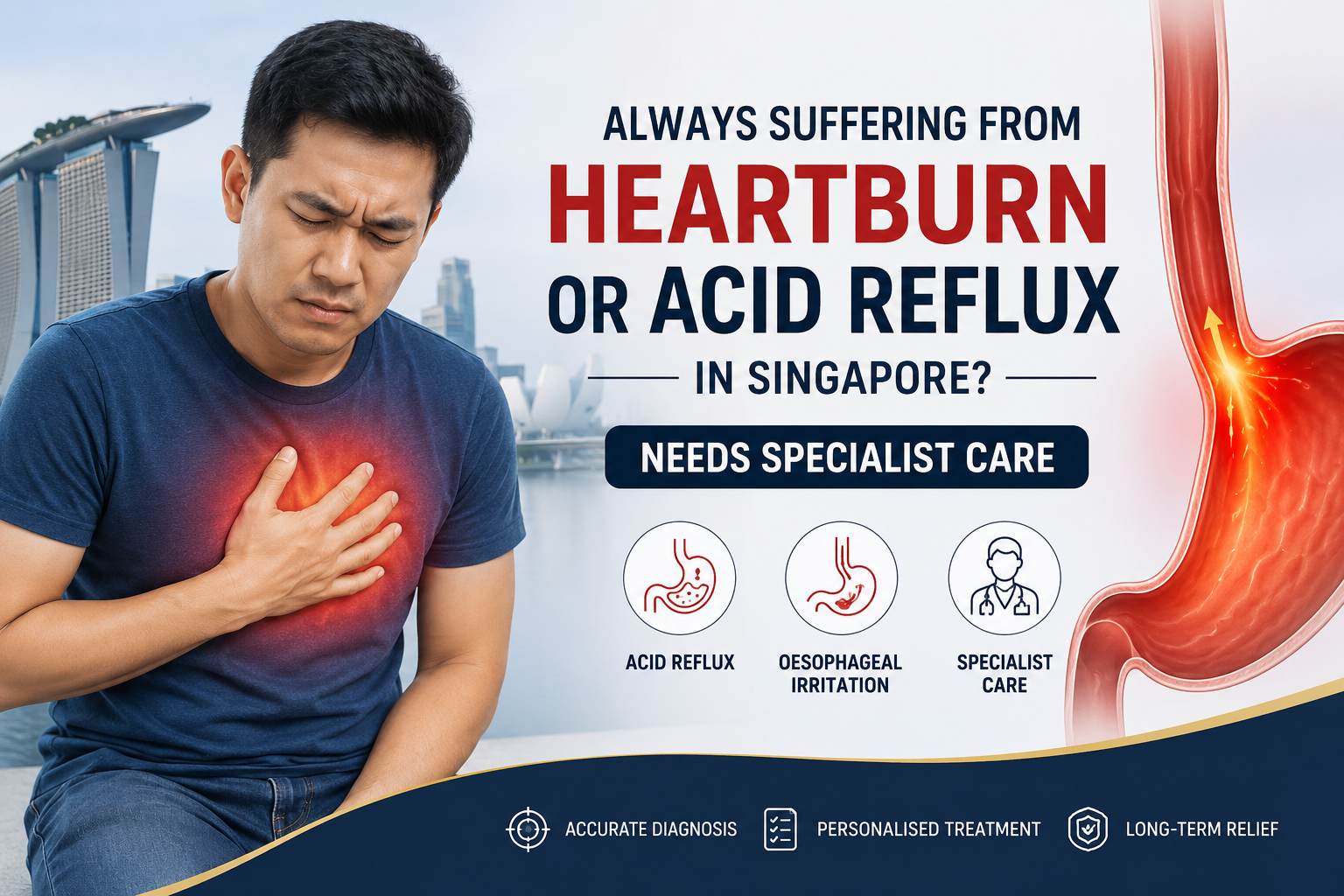
Heartburn after a heavy meal is common. Most people experience it once in a while and move on. But if it keeps coming back, especially several times a week, it may not be “just acidity” anymore.
Often, persistent heartburn or acid reflux points to an underlying digestive condition called gastroesophageal reflux disease (GERD). This is when stomach acid repeatedly flows back into the esophagus and causes ongoing irritation.
In Singapore, the condition is increasingly seen in patients with busy schedules, irregular meals, late-night eating habits, and stress-related lifestyle patterns.
When Heartburn Becomes a Medical Condition
Occasional reflux is normal. GERD is different.
You may be dealing with GERD if you notice:
-
Heartburn occurring more than twice a week
-
A constant sour or bitter taste in the mouth
-
Food or liquid coming back up after meals
-
Chest discomfort after eating
-
Sleep disruption due to burning sensation
-
Frequent throat clearing or chronic cough
When these symptoms persist, the esophagus is exposed to acid repeatedly. Over time, this can lead to inflammation and damage.
Why Acid Reflux Keeps Happening
Acid reflux occurs when the lower esophageal sphincter (LES), a muscle that acts as a valve between the stomach and esophagus, becomes weak or relaxes at the wrong time.
Instead of staying in the stomach, acid flows upward into the esophagus. Unlike the stomach, the esophagus is not designed to handle acid exposure, so irritation occurs quickly.
Common triggers in daily life include:
-
Large or late meals
-
Oily, spicy, or acidic foods
-
Coffee, alcohol, and carbonated drinks
-
Smoking
-
Lying down soon after eating
-
Weight gain
-
Certain medications
Often, it is not one cause but a combination of habits and physical factors.
Why You Should Not Ignore Frequent Symptoms

Many people manage symptoms with over-the-counter medication and continue their routine. This may provide temporary relief, but it does not always address the underlying problem.
If GERD continues untreated, it may lead to:
-
Ongoing inflammation of the oesophagus
-
Painful swallowing
-
Narrowing of the food passage
-
Long-term changes in the oesophageal lining
-
Increased risk of serious complications
This is why recurring reflux should be assessed properly instead of repeatedly self-treated.
How Doctors Confirm GERD
Diagnosis is not based on symptoms alone. Specialists may recommend:
-
Gastroscopy to examine the oesophagus and stomach
-
24-hour pH monitoring to measure acid exposure
-
Esophageal manometry to assess valve function
-
Imaging tests if needed
These investigations help confirm whether reflux is the cause and how severe it is.
Treatment Options in GERD
Treatment usually follows a step-by-step approach.
Lifestyle Changes
This is the first and most important step. Patients are often advised to:
-
Eat smaller meals
-
Avoid food close to bedtime
-
Reduce fatty, spicy, and acidic foods
-
Limit caffeine and alcohol
-
Stop smoking
-
Maintain a healthy weight
-
Sleep with the head elevated
These changes reduce pressure on the stomach and improve valve function.
Medications
If symptoms persist, medication may be added:
-
Antacids for quick relief
-
H2 blockers to reduce acid production
-
Proton pump inhibitors for stronger acid control
While effective for many patients, some still experience symptoms even with long-term medication use.
When Specialist Care and Surgery Are Considered

If reflux continues despite proper treatment, specialist evaluation is needed. Surgery may be discussed when:
-
Symptoms persist despite medication
-
Sleep and daily life are affected
-
Acid exposure is confirmed on testing
-
Long-term medication is not controlling symptoms well
At this stage, minimally invasive GERD surgery may be considered. The aim is to strengthen the valve between the stomach and esophagus so that acid does not flow backward.
Treatment Options for Persistent GERD
Modern surgical options are designed to be less invasive and focus on restoring normal function.
These may include laparoscopic fundoplication, the LINX magnetic ring procedure, transoral incisionless fundoplication, and other endoscopic treatments depending on the case.
Final Thoughts
If you are constantly dealing with heartburn or acid reflux in Singapore, it should not be dismissed as a minor issue. Frequent symptoms often indicate an underlying digestive disorder that needs proper evaluation.
Early diagnosis and structured treatment can prevent long-term damage and improve quality of life.
At Arden JR Surgery, patients receive assessment and management for acid reflux and GERD with a focus on accurate diagnosis, lifestyle guidance, and minimally invasive GERD surgery when required.